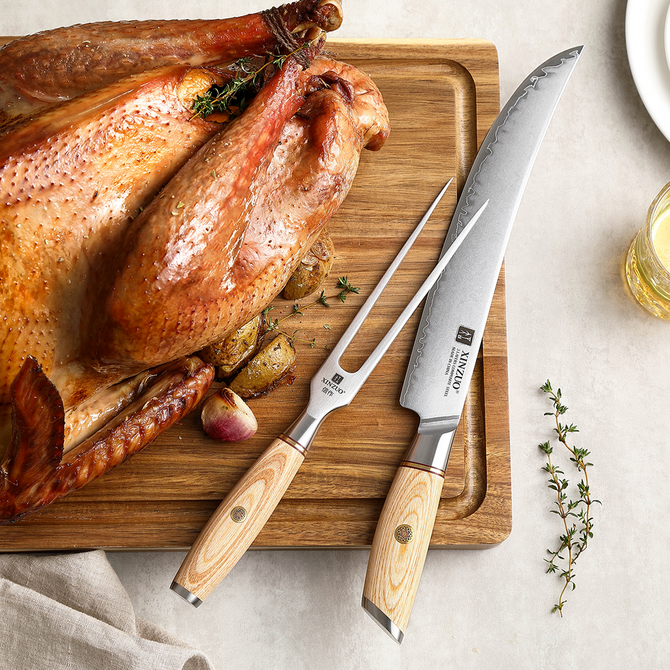
The kitchen is the heart of many homes, where culinary creativity meets the daily necessity of meal preparation. Whether you’re a culinary enthusiast or someone who enjoys the occasional homemade meal, having the right tools can significantly enhance your cooking experience. Among these essential tools, the meat carving fork stands out as a versatile instrument that can elevate your kitchen game. This article delves into the benefits of upgrading your kitchen tools by adding a meat carving fork, demonstrating its utility in diverse culinary applications.
The Importance of a Meat Carving Fork
A meat carving fork is not just another utensil; it is a game-changer in the kitchen. Here”?s why:
- Precision and Control: A carving fork allows for greater control and precision when slicing meats, ensuring that each cut is smooth and even.
- Stability: It helps in stabilizing meat while carving, reducing the risk of slipping and enhancing safety.
- Versatility: Beyond carving meats, it can also be used for lifting and turning large pieces of meat or poultry.
For those interested in expanding their kitchen tool collection, find additional information here.
Choosing the Right Meat Carving Fork
Material and Construction
The material of your carving fork is crucial for both durability and performance:
- Stainless Steel: Offers resistance to rust and corrosion, ensuring longevity.
- Wooden Handles: Provide a classic look and comfortable grip, though they may require more maintenance.
- Ergonomic Design: Look for forks with ergonomically designed handles for a comfortable grip and better control.
Learn more in this detailed guide about selecting the right materials.
Size and Tine Design
The size and design of the tines can affect the fork’s functionality:
- Long Tines: Ideal for handling large roasts and turkeys.
- Short Tines: Better suited for smaller cuts of meat and more precise work.
- Curved Tines: Enhance the grip on meat, making it easier to maneuver.
Explore further insights here on tine design and size.
Caring for Your Meat Carving Fork
Proper care extends the life of your carving fork and maintains its performance:
- Cleaning: Always hand wash and dry immediately to prevent water spots or rust.
- Storage: Store in a knife block or a drawer with blade guards to prevent dulling.
- Sharpening: Regularly maintain the sharpness of the tines for optimal performance.
For more details on maintenance practices, read more about this topic.
Conclusion
Investing in a quality meat carving fork can transform your culinary endeavors, providing precision, stability, and versatility in the kitchen. By understanding how to choose the right fork and maintain it, you can enhance not only your cooking experience but also the presentation of your dishes. For those looking to explore the variety of options available, explore further insights here.