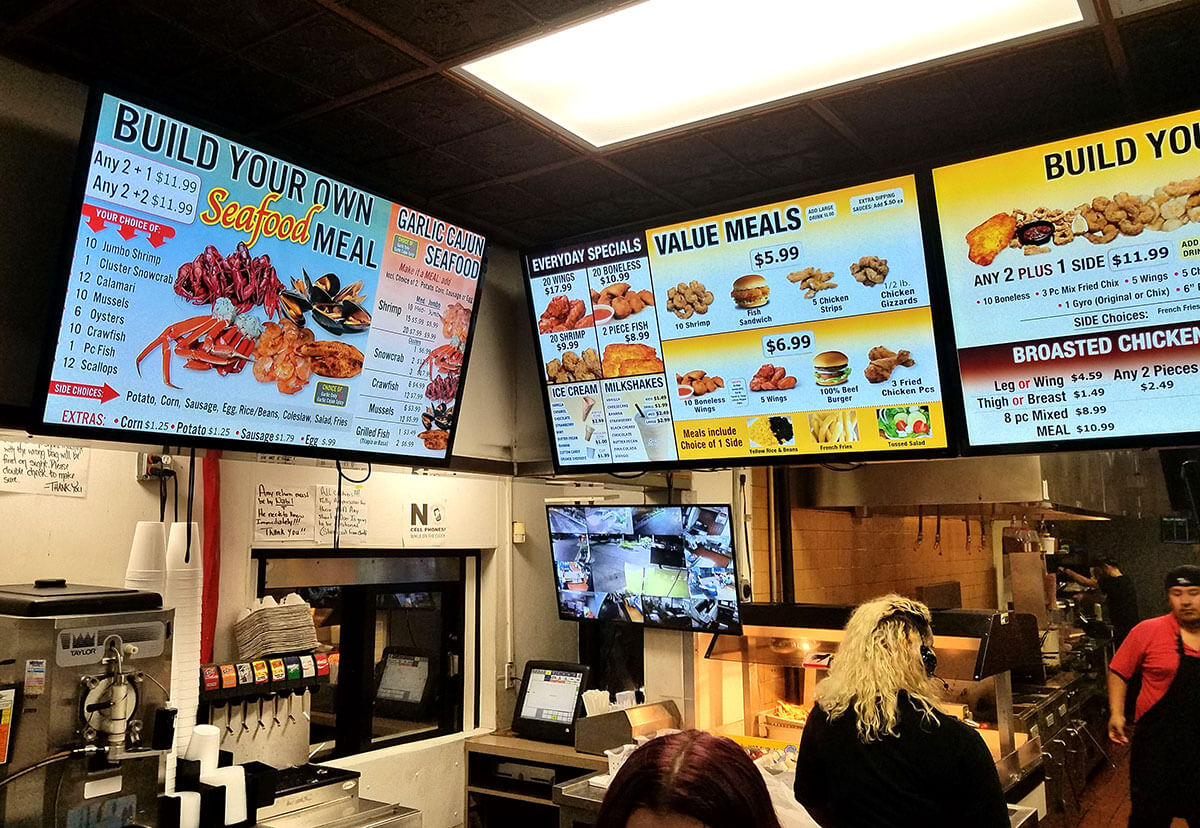
In today’s fiercely competitive market, businesses must employ innovative solutions to stay ahead. One such solution is the integration of digital menu boards, which not only enhance customer experience but also streamline operations. These dynamic displays are rapidly replacing traditional static boards, offering a modern approach to menu presentation. With the right strategies, digital boards can significantly impact customer engagement, operational efficiency, and overall sales growth.
The Advantages of Digital Menu Boards
Digital menu boards offer numerous benefits that can transform the way businesses operate:
- Enhanced Visual Appeal: Digital boards can display high-resolution images and videos, making menus more attractive and engaging.
- Flexibility and Customization: Menus can be updated in real-time, allowing for quick changes to prices, items, or promotions.
- Cost Efficiency: Though the initial investment may be higher, digital boards eliminate the need for constant printing and design costs associated with static boards.
- Improved Customer Experience: Interactive features and animations can guide customers through menu options, improving their overall experience.
For a deeper understanding and expert strategies, discover expert strategies here.
Implementing Digital Menu Boards
Strategic Placement and Design
To maximize the impact of digital menu boards, careful consideration should be given to their placement and design:
- Visibility: Ensure that digital boards are placed at eye level and are easily visible from various points within the establishment.
- Content Flow: Design content that flows logically, guiding the customer naturally through the menu options.
- Brand Consistency: Use consistent colors, fonts, and messaging to reinforce brand identity.
Learn more about tailored solutions and how to effectively implement them by learning about our tailored solutions.
Technological Integration
Integrating digital menu boards with other technological systems can enhance their functionality:
- POS System Integration: Syncing with point-of-sale systems can automate menu updates based on inventory levels.
- Analytics Software: Use analytics to track customer behavior and preferences, optimizing menu offerings accordingly.
- Remote Management: Manage and update menus remotely, ensuring consistency across multiple locations.
For advanced guides and tips on integrating technology, explore advanced guides and tips.
The Future of Digital Menu Boards
As technology continues to evolve, digital menu boards are expected to become even more interactive and personalized:
- AI and Machine Learning: Future boards may use AI to offer personalized recommendations based on customer preferences.
- Augmented Reality: AR technology could provide customers with an immersive experience, allowing them to visualize menu items in 3D.
- Sustainability: Digital boards contribute to sustainability goals by reducing paper waste and energy consumption through efficient LED technology.
Find out more about this approach and the future of digital menu boards by visiting this resource.
Overall, digital menu boards present a powerful tool for businesses looking to enhance their operational efficiency and customer engagement. By strategically implementing these systems and staying abreast of technological advancements, businesses can maintain a competitive edge in the marketplace.